1
Residents and visitors
More tourists and international residents looking for authentic experiences.

Jar is building a specialized technology platform for local food and hospitality experiences. It connects qualified local producers with residents, visitors, and tourists, helping them discover traditional dishes, homemade products, and cooking services through one multilingual experience. The project starts in Saudi Arabia, drawing on tourism growth and the diversity of its residents, with a model designed for regional and international expansion.
As the number of residents and international visitors in Saudi Arabia grows, alongside investment in tourism, a clear gap remains: there is no specialized platform that brings the full local food experience together, from traditional dishes and homemade products to culturally rooted hospitality.
Uber has become a global technology platform for transport, and Airbnb for accommodation. Local food still lacks a specialized global platform connecting visitors and residents with local people and authentic food producers, sharing culture through food and hospitality.
An opportunity to build in Saudi Arabia, then expand globally as a destination for discovering local food and authentic hospitality.
From growing demand to a missing global platform.
More tourists and international residents looking for authentic experiences.
Major hotels and destinations expand the market.
Traditional dishes, home cooking, and cultural hospitality.
No specialized global platform for local food and hospitality.
A platform that starts locally and scales internationally.
 The Jar opportunityFrom Saudi Arabia to the world
The market is growing. The experiences exist. A specialized global platform is still missing.
Global ambition requires a clear view of the factors that can slow growth. The platform must accommodate differences in regulation, payment methods, logistics, and user behavior, as well as a rapidly changing technical environment.
Jar's flexible platform structure is designed to adapt to each market without rebuilding the product when entering a new country.
Ready for geographic expansionAutomated transactions reduce manual intervention, improve accuracy, and speed up collection and settlement.
Faster, more accurate settlementA strategic logistics partner can connect directly to the platform, bringing ordering and delivery together without the cost of building and operating an independent delivery network.
An asset-light operating modelA small team and flexible structure support experimentation and quick problem solving. Giving the founding team clear authority improves response times as new markets open.
Clear ownership and quick responsesJar addresses the cultural and technical gap in local food and hospitality. It connects visitors directly with local producers and helps them discover a community through its food. AI supports three main areas:
Use AI tools to build features faster, improve systems, test errors, and resolve them.
Faster delivery and reliabilityAnalyze product performance, demand, and customer behavior to suggest ways to increase sales and improve visibility.
Performance insights and sales growthHelp customers plan occasions, identify needs, find suitable products, and match with the right seller.
Relevant products and sellersJar combines local commerce, cultural experiences, analysis, personalization, and multilingual expansion within one platform.
Jar's main operational challenges are financial management and customer complaints, particularly as users, orders, and the number of markets grow.
Automate collections and payment requests to reduce manual work, increase accuracy, accelerate settlement, and limit operational errors.
Automated collection and settlementA qualified team receives and classifies complaints, studies their causes, and identifies recurring patterns. Findings inform product and service improvements that address root causes and improve customer satisfaction.
Resolve causes, improve serviceA continuous feedback loop turns analysis into improvements to the service and the platform.
Jar enables qualified local producers to list their food and hospitality products and services for free, reaching customers without building their own store or taking on high marketing costs.
The platform promotes these experiences locally and internationally, connecting tourists and residents with local people. Its multilingual design can serve different markets while accommodating each country's legal requirements, licensing, and operating rules.
A free channel to showcase products and services to local and international customers.
Free entry and broader reachA trusted, accessible way to discover authentic local food and hospitality offered by residents.
Authentic local experiencesA unified platform that organizes a fragmented sector and creates an opportunity for international growth.
A structured, scalable marketA connected experience for local cooks, food producers, customers, and visitors.
JarShareShare what is nearbyComplete management for sellers. A simple, secure experience for customers.
From discovering local products to managing menus, payments, and conversations, JarShare brings cultural context and practical tools together for customers and sellers.
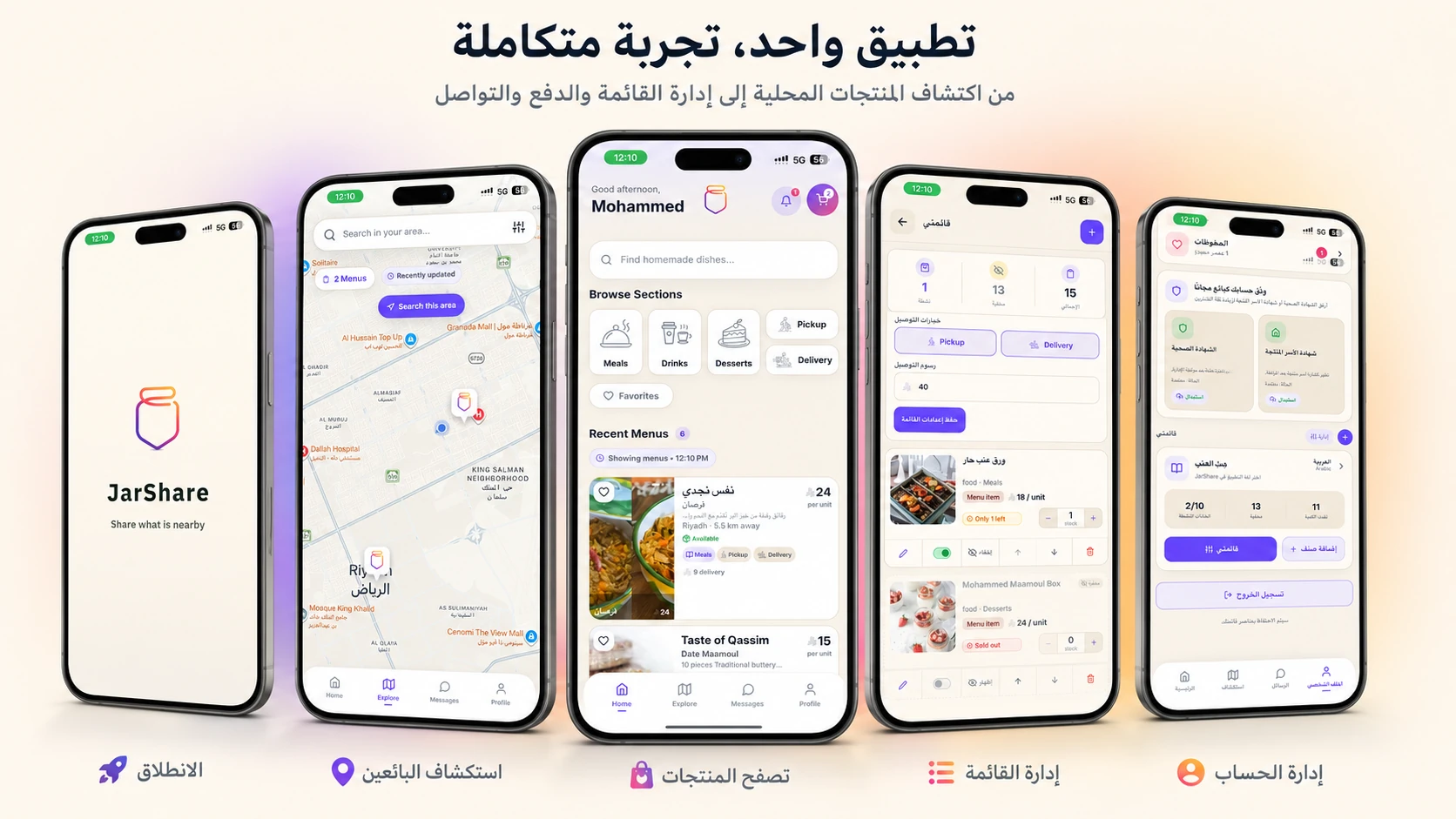
A clear introduction to JarShare and its purpose: Share what is nearby.
An interactive map of local cooks and productive families in nearby neighborhoods.
Meals, drinks, and desserts with clear prices and availability.
Tools for prices, products, inventory, pickup, and delivery.
Seller profiles and health and productive-family certificates help establish trust.
Jar launches with three core categories that serve everyday needs:
Everyday dishes and traditional, local food.
Hot and cold drinks and related homemade products.
Homemade, traditional, and contemporary desserts.
Freezer-ready food for storage and preparation.
Ramadan hospitality, food, drinks, and occasion preparation.
Gifts, favors, and products for celebrations.
Food and drinks for outdoor trips and winter gatherings.
Categories evolve with seasons, local conditions, customer behavior, and available capabilities, creating new opportunities for producers throughout the year.
Food culture is part of identity and intangible heritage. Jar supports the documentation of traditional dishes, preparation methods, and hospitality, making them accessible to residents and visitors.
Reach new customer groups and manage products, payments, and promotion from one place, widening the economic participation of local food producers.
The project anticipates direct roles in technology, operations, marketing, and customer service, alongside opportunities for producers, logistics providers, and preparation and packaging suppliers.
Producer sales, local businesses, and visitor spending on authentic experiences can support the wider food, culture, and hospitality economy.
A Saudi model combining culture, technology, and the economy, designed to expand internationally.
The phased first-year plan combines expansion into 10 countries, more than 100,000 users, and a monthly sales target of SAR 500,000. It also calls for logistics partnerships, a presence at airports and events, and operational and financial governance that supports venture investment.
The two core audiences are qualified local food and hospitality producers, and residents, visitors, and tourists looking for trusted, accessible local experiences.
Start with meals, drinks, and desserts, then add seasonal categories such as freezer-ready food, Ramadan hospitality, Eid gifts, and winter trips.
Reach the first 100 users through word of mouth and the founders' and sellers' networks. Follow with focused campaigns informed by interests, locations, and behavior, then build a presence at conferences, exhibitions, and airports.
Year one focuses on validating growth and international expansion, building a strong user base, and reaching sales levels that support the platform's sustainability.
Geographic expansion
Phased regional and international entryA growing user base
Customers, visitors, and local producersMonthly sales target
Target run rate by the end of year oneBrand visibility
Reach visitors and travelersIntegrated service
An asset-light delivery modelThe next stage of growth
Prepare for subsequent funding roundsMeasurable targets for the transition from model validation to regional growth.
Jar's expansion depends on the opportunity and readiness of each market. The initial sequence after Saudi Arabia is:
A rich culinary heritage and opportunities to share authentic food expertise.
Phase 1A strong hospitality culture and a wide range of traditional homemade food.
Phase 2High basket values and an active dessert and hospitality market.
Phase 3Measured entry as market opportunities and operating capabilities align.
Regional rolloutSaudi Arabia's diverse resident community helps reveal demand in potential markets and supports word-of-mouth acquisition through existing local networks.
Marketing begins with a real community, moves into targeted paid campaigns, and expands into local and international brand visibility.
Use the founders', sellers', and early customers' networks to reach the first 100 users, test the experience, understand behavior, and collect feedback before increasing spend.
Run campaigns for specific seller, customer, and tourist groups. Encourage referrals and attract people with a clear interest in the service.
Analyze interests, locations, nationalities, browsing, and orders to select the most promising audiences, channels, and markets.
Build recognition through local conferences and exhibitions, followed by international events, partnerships, and entry into new markets.
Marketing investment increases gradually in response to actual usage and measurable results.
JarShare connects skilled home cooks and qualified productive families with residents, tourists, and companies seeking authentic food experiences. The platform starts in Saudi Arabia and plans a measured expansion into 10 markets.
Planned expenses, platform revenue, and the funding requirement.
| Financial item | Amount (SAR) | Type | Purpose and assumptions |
|---|---|---|---|
| Annual gross merchandise value (GMV) | 2,500,000 | Transaction volume | Annual volume supporting a monthly sales run rate of SAR 500,000 by year end. |
| Annual operating expenses (OPEX) | 720,000 | Recurring annual expense | People: SAR 420,000. Marketing: SAR 180,000. Technology, hosting, and AI infrastructure: SAR 120,000. |
| Regional setup: 10 markets | 250,000 | One-time investment | SAR 25,000 per market for licensing, local payment setup, and initial marketing. |
| Total operating and expansion budget | 970,000 | Cash outflow | SAR 720,000 in operations plus SAR 250,000 in regional expansion. |
| Less: expected platform income | -172,000 | Cash inflow | The financial model assumes 4% local and 7% regional platform income, plus promotional services. |
| Operating funding gap | 798,000 | Funding shortfall | The difference between first-year expenses and expected income. |
| Strategic cash reserve | 152,000 | Contingency reserve | A buffer for market fluctuations and emerging expansion opportunities. |
| Total seed funding requested | 950,000 | Seed investment | SAR 798,000 funding gap plus SAR 152,000 cash reserve. |
Jar's revenue model begins with transaction fees and can expand into subscriptions, seasonal services, advertising, and international shipping.
The proposed local transaction fee is 9.5%. After processing costs, the platform's expected share is approximately 4% of each transaction.
Expected net platform share: about 4%The initial international model proposes a 15% transaction fee to cover operations, payments, and expansion, with pricing reviewed as each market stabilizes.
Review after market entryThe free plan includes a limited number of items. Sellers can purchase additional capacity, with pricing based on observed behavior and willingness to pay.
Optional paid capacityHospitality, outdoor trips, freezer-ready products, and gifts offer additional revenue opportunities and can increase basket value during seasonal peaks.
Seasonal basket growthSpecialized advertising can connect sellers with providers of cooking equipment, preparation tools, packaging, and related services.
A focused B2B audienceExplore international shipping for qualifying food products, subject to export, transport, and storage standards. Potential income includes shipping fees, commissions, and logistics partnerships.
Future logistics opportunitiesThe current lean operating structure includes a technical director, developer, product manager, and operational team. The technical team works full-time, with part-time administrative support and flexible compensation during formation. Compensation is intended to become sustainable as revenue or funding grows.
AI is part of the proposed operating model, supporting faster development, seller decisions, and more relevant buying experiences.
The plan targets a 60% reduction in development cycles through generative AI, with lower engineering costs, faster debugging, and stronger technical security.
Faster development, efficient capital useA seller assistant recommends pricing based on nearby competition and forecasts demand by week and season to help reduce waste.
Seller profitability and retentionMatch visitors' preferences with nearby home cooks and plan food for events around the customer's budget and guest count.
Personalized repeat experiences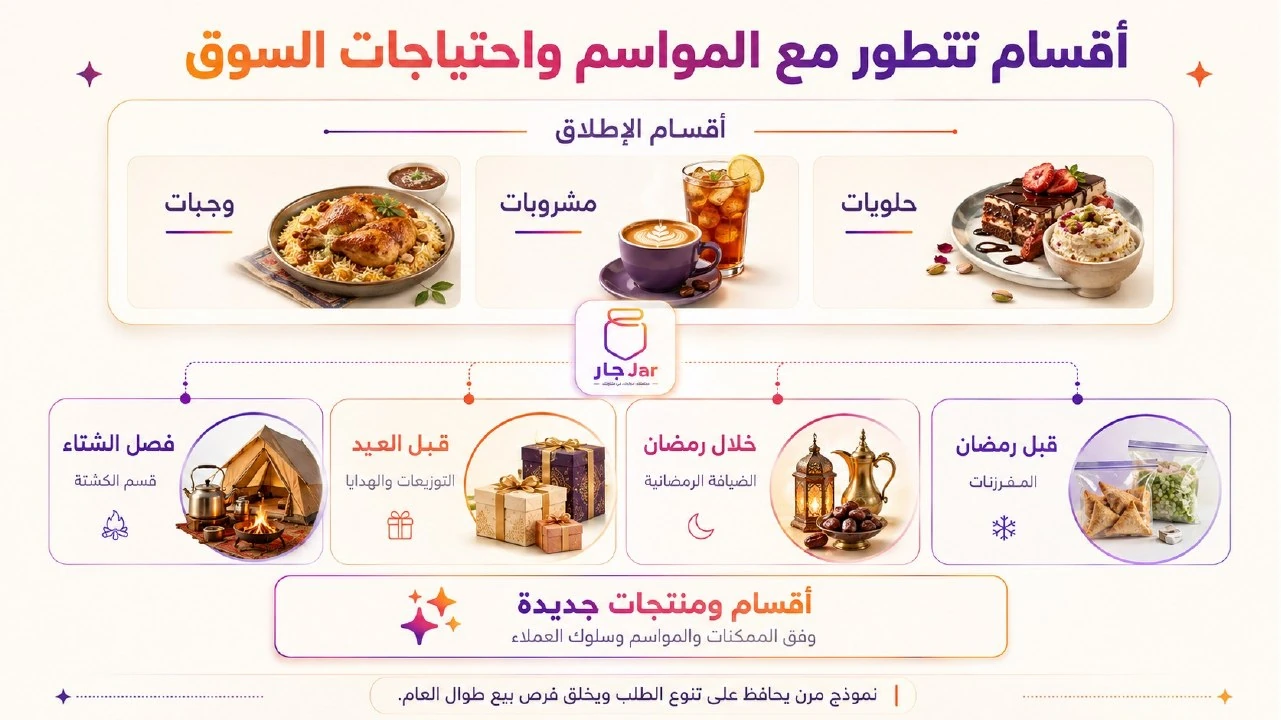
Move into each new market only after readiness and financial validation.
Headquarters and core market: validate the commercial model, establish the technology platform, and work toward 100,000+ users.
Connect rich home-cooking traditions, expertise, and flavors with regional demand.
Expand into desserts and premium home kitchens with higher basket values.
Serve communities and visitors through appropriately licensed authentic food experiences.
Up to 10 items with no upfront or monthly listing subscription, lowering the barrier to participation.
The financial projection uses a 4% local platform share, rising to 7% in regional markets.
Expanded menus, seasonal visibility, verified chef badges, and specialized promotion for suppliers.
Start with a community of 100 sellers and users
A team combining executive leadership, technical innovation, and financial and operational discipline, with more than 60 years of combined experience across government strategy, technology platforms, and risk management.
10+ years in sector and national strategy across government and private organizations, leading transformational initiatives.
15+ years in software platforms, cloud architecture, and AI integration for security and faster development.
Seller and buyer experience, digital product journeys, and engagement that supports conversion.
Smart pricing, occasion recommendations, and cloud data integration.
15 years in project management offices, performance measurement, and regional expansion budget governance.
20+ years of experience. Regional expansion risk, transaction protection, and local regulatory compliance.
Operating budgets, liquidity, and capital allocation for regional markets.
Collections, seller settlements, feasibility models, and account review.
Delivery, direct pickup, and distribution coordination to fulfill orders.
Food safety standards, productive-family documentation, and verified seller quality.
Institutional partnerships, heritage festivals, and culinary and hospitality events.
Organic acquisition, word of mouth, and city expansion campaigns.
Speak directly with the founding team through Arwa.
Investor confidentiality: This memorandum is intended for qualified investors for preliminary assessment of Jar. The supplied document states that it is confidential and subject to confidentiality and non-disclosure requirements in Saudi Arabia.